
Does the outside of your hip ache when you lie on that side at night? Does climbing stairs, getting up from a chair, or walking for more than a few minutes make it worse? If so, you may have hip bursitis, one of the most common causes of outer hip pain in adults, and one of the most treatable.
Hip bursitis sounds like a small problem, but it can quietly take over your days. It disturbs your sleep, slows your walking, and makes simple things like putting on shoes or getting in and out of a car uncomfortable. The good news is that most cases improve well with physiotherapy, without surgery, and the sooner treatment starts, the faster the recovery tends to be.
This guide explains hip bursitis in plain words: what it is, what causes it, how to tell it apart from other hip problems, how physiotherapy treats it, which exercises help, how long recovery takes, and when you should see a doctor urgently. If you are looking for hip bursitis treatment Surrey physiotherapists provide close to home, and your outer hip has been hurting for days or weeks, this guide is the place to start.
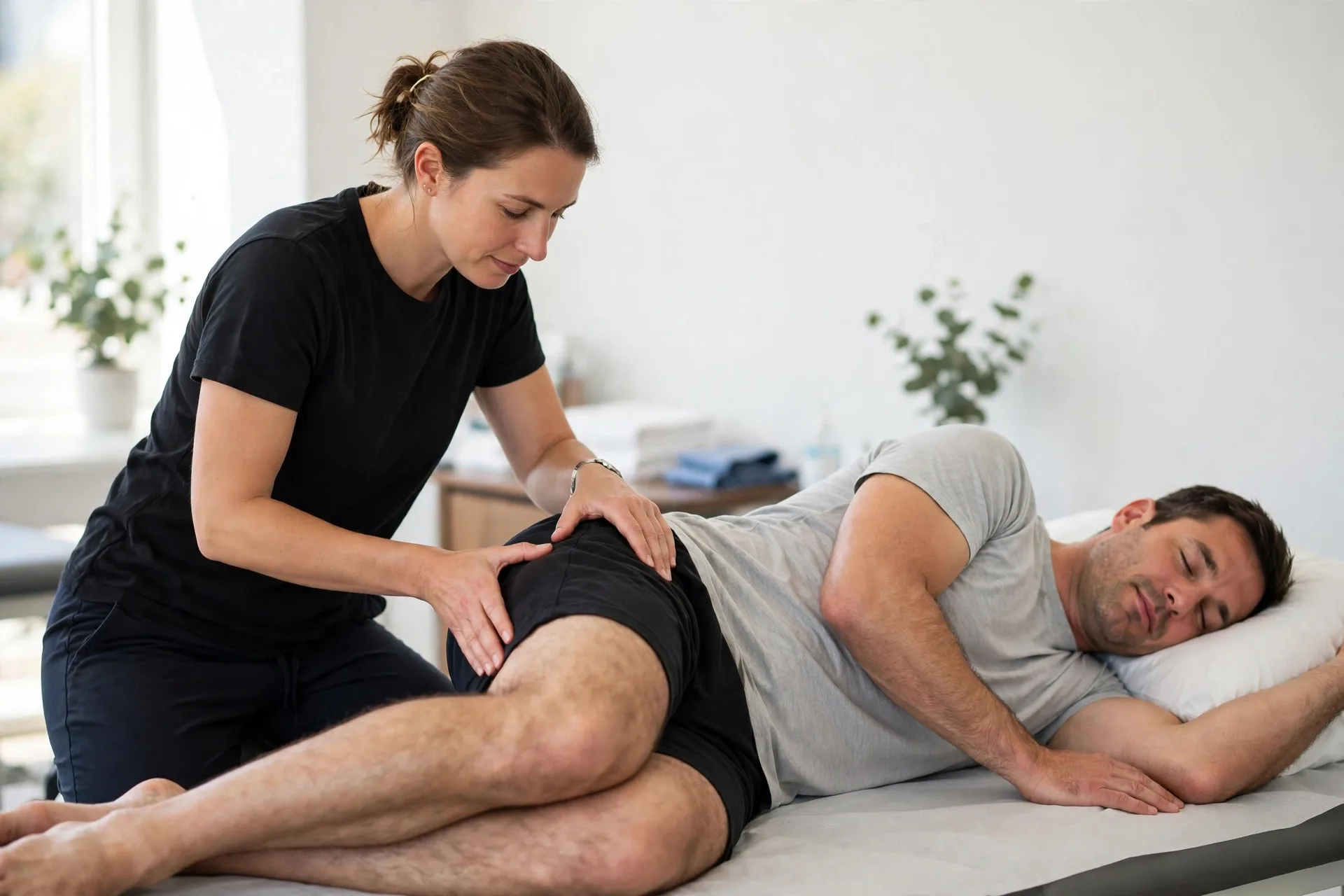
Physiotherapy assessment for hip bursitis at Renew Physiotherapy, Surrey
What Is Hip Bursitis?
Hip bursitis is inflammation of a bursa, a small fluid-filled sac that cushions the tissues around a joint. Bursae sit between bone and soft tissue, like tiny pillows, and they let tendons and muscles glide smoothly over bone. When a bursa becomes irritated and swollen, every movement over that spot can hurt.
The bursa most often affected in the hip is the trochanteric bursa. It sits on the outside of the hip, over the greater trochanter, the bony point you can feel at the top of your thigh. That is why the condition is also called trochanteric bursitis. The bursa lies between the greater trochanter and the iliotibial band, the thick band of tissue that runs down the outside of the thigh from the hip to the knee. With every step you take, the band passes over the bursa, and if the band is tight or the hip muscles are weak, the rubbing irritates the bursa.
Doctors today often use the broader term greater trochanteric pain syndrome, because the pain is not always from the bursa alone. The tendons of the gluteus medius and gluteus minimus muscles attach right at the greater trochanter, and those tendons are often irritated at the same time. Whether the main problem is the bursa, the tendons, or both, the treatment approach is very similar, which is why a proper assessment matters more than the exact label.
Hip bursitis can affect anyone, but it is most common in women between 40 and 60, in runners and cyclists, and in people who spend long hours on their feet. It can affect one hip or, less often, both.
What Causes Hip Bursitis?
Hip bursitis develops when the bursa is repeatedly squeezed, rubbed, or injured. The most common causes are:
Symptoms of Hip Bursitis
The symptoms of hip bursitis are usually easy to recognise once you know what to look for:
- Pain over the outside of the hip, right at or around the bony point at the top of the thigh. The spot is often tender to touch, and even light pressure from clothing can hurt.
- Pain that gets worse when you lie on the affected side, often bad enough to wake you at night.
- Pain when climbing stairs, walking uphill, or getting up from a chair after sitting.
- Pain that spreads down the outside of the thigh, sometimes as far as the knee.
- A dull ache that is worse after activity and eases with rest, at least in the early stages.
- Stiffness in the hip, especially first thing in the morning or after sitting for a long time.
- Limping, because putting weight on the sore hip hurts.
- Swelling or warmth over the outer hip, though this is less common than pain and tenderness.
Hip Bursitis or Something Else?
If you have already tried rest and painkillers and the pain keeps coming back, the cause is probably mechanical, weak muscles, a tight IT band, or a movement pattern that keeps loading the same spot. That is exactly what physiotherapy is designed to find and fix.
How Hip Bursitis Is Diagnosed
There is no single test for hip bursitis. Diagnosis is based on your story and a hands-on examination, and a physiotherapist can usually identify it in the first visit.
Your physiotherapist will ask when the pain started, what makes it worse, whether you can lie on that side, what activities you do, and whether you have had a fall, surgery, or arthritis. Bring a list of medicines you take, and wear comfortable clothing so the hip can be examined easily.
The examination includes pressing over the greater trochanter to check for tenderness, testing hip strength and range of motion, and watching how you walk and stand on one leg. A few simple tests, such as resisted hip abduction and single-leg stance, help confirm that the outer hip structures are the source of the pain. Your physiotherapist will also check your lower back, because back problems can refer pain to the hip, and will rule out a problem inside the hip joint.
Imaging is not needed for most cases. An X-ray may be ordered if hip arthritis is suspected, and an ultrasound or MRI is sometimes used when the pain does not improve with treatment, to check the bursa and the gluteal tendons. But in most cases the examination is enough to start treatment.
In British Columbia, you do not need a doctor's referral to see a physiotherapist. You can book directly, and your physiotherapist will refer you to your family doctor if anything in the assessment suggests you need medical tests or a specialist opinion.
Hip Bursitis Treatment in Surrey: How Physiotherapy Helps
Physiotherapy is the first line of treatment for hip bursitis, and most people improve without injections or surgery. The plan has two parts: calm the irritated bursa down, then fix the reason it became irritated in the first place. Skipping the second part is why hip bursitis so often comes back.
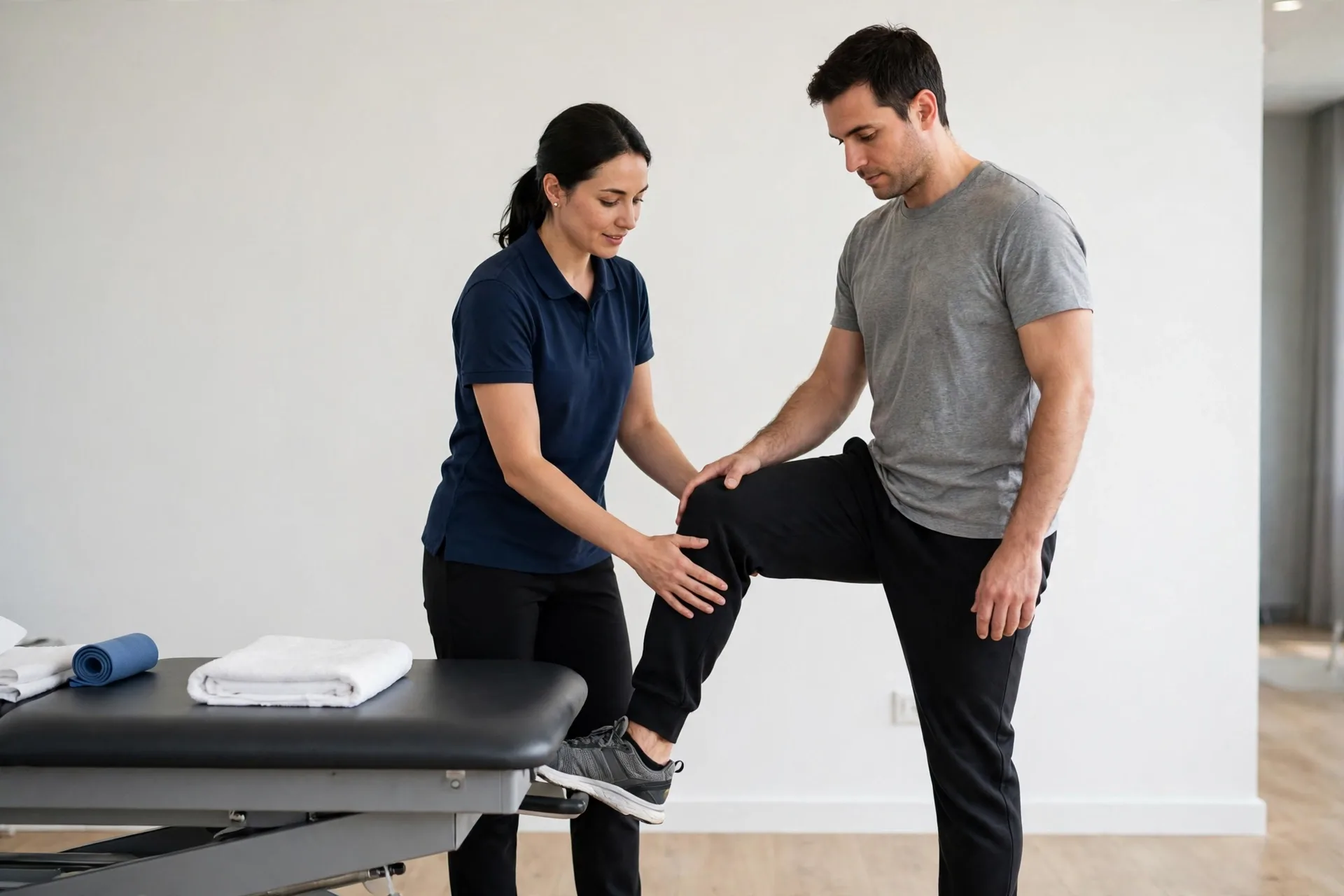
Guided hip stretching as part of hip bursitis treatment at Renew Physiotherapy, Surrey
Corticosteroid injections into the bursa are sometimes offered by a doctor when physiotherapy alone has not settled the pain. An injection can reduce pain for weeks to months, but it does not fix weak muscles or a tight IT band, so it works best combined with a physiotherapy program. Surgery is very rarely needed for hip bursitis and is only considered when months of conservative treatment have failed.
Exercises for Hip Bursitis
Exercise is the most effective long-term treatment for hip bursitis, but only the right exercises, done at the right stage. Start gently, stop if an exercise causes sharp pain, and build up slowly. These exercises are general guidance, not a prescription: your physiotherapist will adjust them to your condition and tell you which ones to start with.
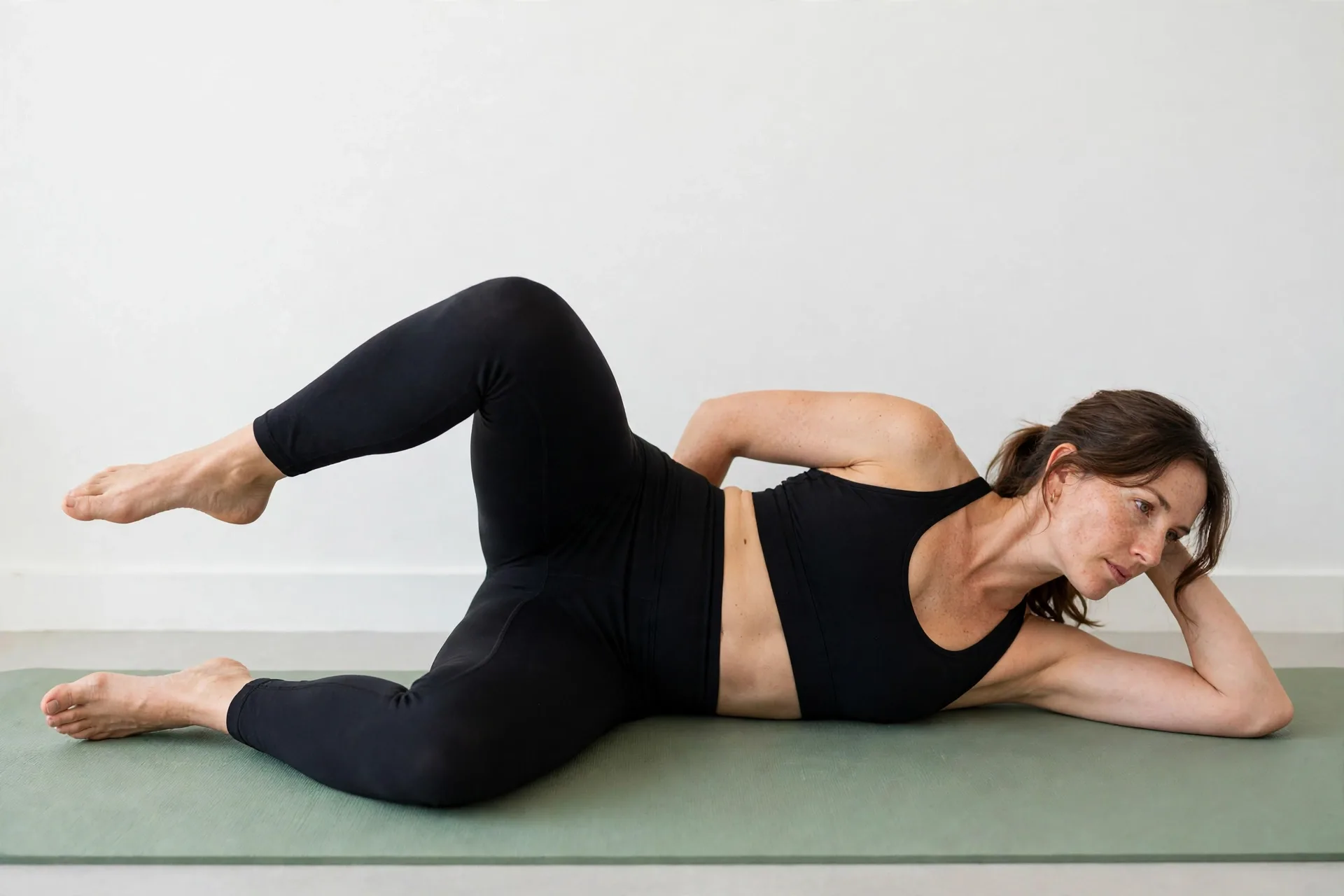
Clamshell exercise to strengthen the hip muscles that protect the bursa
Do these exercises once a day to start, and build to twice a day as they become easier. Mild muscle effort is normal; sharp pain over the outer hip is a sign to stop and check with your physiotherapist. Avoid deep squats, running, and lying on the sore side while the bursa is still very tender.
What to Expect at Renew Physiotherapy
Your first visit at Renew Physiotherapy starts with a full assessment: your history, a hands-on examination of the hip and lower back, and tests of strength, flexibility, and movement. From that, your physiotherapist builds a personal treatment plan and explains it in plain words, including what is causing your pain and how long recovery is likely to take.
Treatment usually combines hands-on therapy with a home exercise program, so you are improving between visits, not only during them. Your plan is reviewed at each visit and progressed as the pain settles and the hip gets stronger. Most people notice the night pain easing first, then find stairs and walking become easier over the following weeks.
Renew Physiotherapy is at 5722 176a Street, Surrey, BC V3S 4H2. You can book by calling (236) 450-0171 or by emailing Info@renewclinics.ca. No doctor's referral is needed, and you can book directly for hip bursitis treatment Surrey residents can access close to home, without a long wait.
How Long Does Recovery Take?
Recovery from hip bursitis depends on how long the problem has been there and what is causing it.
Mild cases, where the pain started recently after a clear trigger such as a fall or a sudden increase in activity, often improve in 2 to 4 weeks with activity modification, ice, and a simple exercise program.
Moderate cases, where the pain has been present for a month or two and the hip muscles are weak, usually need 6 to 8 weeks of physiotherapy, with visits once or twice a week at first, then less often as you improve.
Chronic cases, where the pain has lasted for several months, take longer, often 8 to 12 weeks or more, and may need shockwave therapy or dry needling alongside exercise. The longer a bursa has been irritated, the longer it takes to settle, which is why it pays to get assessed early rather than waiting to see if it goes away on its own.
The biggest reason hip bursitis comes back is stopping treatment too early. Pain often eases before the hip muscles are strong enough to keep the bursa calm, and returning to full running or heavy stairs at that point starts the cycle again. Your physiotherapist will guide the return to activity in stages so the improvement lasts.
When to See a Doctor Urgently
Most hip bursitis is not dangerous, but a few symptoms need medical attention promptly:
- Fever, or a hip that is hot, red, and swollen, which can indicate an infected bursa. An infected bursa needs medical treatment, not physiotherapy alone.
- A recent fall or injury followed by an inability to put weight on the leg, which may indicate a fracture.
- Numbness, tingling, or weakness in the leg or foot.
- Pain that rapidly gets worse, or pain that does not improve at all after several weeks of treatment.
- Unexplained weight loss, or night pain that does not ease with rest or position changes.
- A history of cancer, immune suppression, or long-term steroid use, where new hip pain should always be checked by a doctor.
If any of these apply, see your family doctor or visit urgent care. Your physiotherapist will also refer you for medical assessment if anything in your examination suggests the problem is not simple bursitis.
Preventing Hip Bursitis
Once your hip bursitis has settled, a few habits keep it from coming back:
- Keep the glute strengthening exercises going two or three times a week, even after the pain is gone. Strong hip muscles are the best protection against recurrence.
- Build up activity gradually. Increase running distance, stair climbing, or walking time by no more than about 10 percent per week, and avoid sudden jumps in training.
- Wear supportive footwear, especially if you are on your feet all day, and replace worn-out running shoes before the cushioning fails.
- Sleep with a pillow between your knees if you sleep on your side, so the top leg stays level with the hip instead of dropping across it.
- Avoid sitting with the sore leg crossed over the other for long periods, and get up and move every 30 to 60 minutes if you sit at a desk.
- Warm up before exercise and stretch the hips and IT band afterwards.
- Keep a healthy weight, because extra body weight increases the load on the hip with every step.
Frequently Asked Questions
Can hip bursitis heal on its own?
Mild hip bursitis sometimes settles on its own with rest and activity changes, usually within a few weeks. But if the cause is weak hip muscles or a tight IT band, the pain often returns as soon as you go back to normal activity. Physiotherapy fixes the underlying cause, which is why hip bursitis treatment Surrey physiotherapists provide gives a more lasting result than rest alone.
How long does hip bursitis last?
Without treatment, hip bursitis can last for weeks or months, and it often comes and goes. With physiotherapy, mild cases usually improve in 2 to 4 weeks, moderate cases in 6 to 8 weeks, and chronic cases in 8 to 12 weeks or more. The sooner you start treatment, the shorter the recovery tends to be.
Should I rest or keep moving with hip bursitis?
Keep moving, but move wisely. Complete rest weakens the hip muscles and can make the problem worse. Gentle walking, the exercises in this guide, and daily activities within your pain limits are better than bed rest. Avoid the specific activities that flare the pain, such as running, cycling, and climbing many stairs, until the bursa has calmed down.
Is walking good for hip bursitis?
Yes, gentle walking is usually good for hip bursitis, as long as it does not make the pain worse. Start with short, flat walks and build up gradually. If walking makes the outer hip ache for hours afterwards, shorten the distance and build up more slowly. A physiotherapist can check your walking pattern and suggest changes that reduce the load on the bursa.
When should I see a physiotherapist for hip bursitis?
See a physiotherapist if the pain has lasted more than a week or two, if it keeps you awake at night, if it stops you climbing stairs or walking comfortably, or if it keeps coming back after rest. Early assessment finds the cause and starts the right treatment before the problem becomes chronic. You do not need a doctor's referral in BC.
Book Your Appointment at Renew Physiotherapy
Outer hip pain does not have to become your normal. With the right assessment, a targeted exercise program, and a plan to fix the cause, most people with hip bursitis get back to walking, sleeping, and moving without pain.
Renew Physiotherapy is at 5722 176a Street, Surrey, BC V3S 4H2. Call (236) 450-0171 or email Info@renewclinics.ca to book an assessment. No doctor's referral is needed.