
Did your knee twist on the soccer field and swell up that evening? Or did the pain simply creep in over weeks, with a catching feeling every time you squat or climb stairs? Either way, you may have a meniscus tear, one of the most common knee injuries we treat, and one that often recovers well without surgery.
A meniscus tear sounds like a serious diagnosis, and it is natural to worry that surgery is the only answer. In reality, many meniscus tears, especially the gradual ones that come with age, improve with structured physiotherapy alone. The key is knowing which type of tear you have, what to do in the first two days, and how to rebuild the knee step by step.
What Is the Meniscus?
Each knee has two menisci (meniscus is singular, menisci is plural). They are C-shaped pads of tough cartilage that sit between the thigh bone (femur) and the shin bone (tibia). The medial meniscus sits on the inner side of the knee, closest to your other knee. The lateral meniscus sits on the outer side.
Think of the menisci as shock absorbers and stabilizers. They spread the load across the knee so that no single small area takes all the force. Walking puts up to twice your body weight through the knee, and running puts roughly eight times your body weight through it. Without the menisci, that force would concentrate on a small patch of joint cartilage and wear it down, which is one reason meniscus damage and knee arthritis often go together in older adults.
The menisci also deepen the relatively flat top of the shin bone into a shallow socket, which helps keep the round thigh bone stable as the knee bends and straightens. When part of a meniscus tears and folds out of place, it can get caught between the bones, which is why a torn meniscus often causes catching, clicking, or locking rather than simple pain.
One detail shapes treatment: only the outer third of the meniscus has a blood supply. Tears in that outer zone can sometimes heal, especially in younger people. The inner two-thirds have little or no blood flow, so tears there generally do not heal on their own. That does not mean the knee is doomed. A tear does not have to fully heal for the knee to become pain-free and fully functional, and that is exactly what good rehabilitation achieves for most people.
Traumatic vs Degenerative Meniscus Tears
Meniscus tears come in two broad types, and telling them apart matters because the treatment path is different.
This distinction is the single most useful thing to understand about meniscus tear treatment Surrey patients receive. For most degenerative tears, and many smaller traumatic ones, structured rehabilitation produces results equal to surgery. For a large traumatic tear in a young athlete, or a knee that is mechanically locked, a surgical opinion is more likely to help. Your physiotherapist's job at the first visit is to work out which group you are in.
Symptoms of a Meniscus Tear
A torn meniscus usually announces itself in a recognizable pattern:
- Pain along the joint line, the seam on the inner or outer side of the knee where the two bones meet. This is the classic location, and it is often tender to press.
- Catching, clicking, or popping when you bend or twist the knee, as if something small is stuck inside the joint.
- Locking: the knee will not fully straighten, because a torn fragment has jammed in the hinge. This is different from stiffness; the knee feels blocked.
- Swelling that builds over hours or a day after the injury, or that comes and goes with activity, rather than the rapid, heavy swelling of an ACL tear.
- Pain with twisting, deep squatting, kneeling, or climbing stairs. Our guide to knee pain when climbing stairs explains how stair pain helps separate meniscus problems from other knee conditions.
- A feeling that the knee is unreliable or might give way, usually because pain switches the thigh muscle off rather than because the joint is truly unstable.
- Stiffness and loss of full bending or straightening, especially first thing in the morning or after sitting.
What to Do in the First 48 Hours
What you do in the first two days shapes how well the knee settles. Follow these steps:
- Stop the activity. Do not try to walk it off or finish the game. Twisting on a freshly torn meniscus can turn a small tear into a larger one.
- Ice it. Apply ice for 15 to 20 minutes every 2 to 3 hours, wrapped in a thin towel, never directly on skin.
- Compress and elevate. A snug elastic bandage controls swelling, and raising the leg above heart level helps fluid drain from the joint.
- Use crutches if walking hurts. Limping irritates the knee and overloads the other leg. Put only as much weight through the leg as you can without a limp.
- Avoid heat, alcohol, and deep massage for the first two days. All three increase bleeding and swelling inside the joint.
- Book an assessment. A physiotherapist can test the knee, work out whether the meniscus, the ACL, or both are involved, and tell you whether you need imaging. No doctor's referral is needed in BC.
Painkillers such as acetaminophen can help in the first days, and anti-inflammatory medicines are sometimes used short term. Follow the directions on the package and check with your pharmacist or doctor if you take other medicines. Medication calms symptoms; it does not fix the mechanics, which is why rehabilitation still matters once the knee settles.
How a Meniscus Tear Is Diagnosed
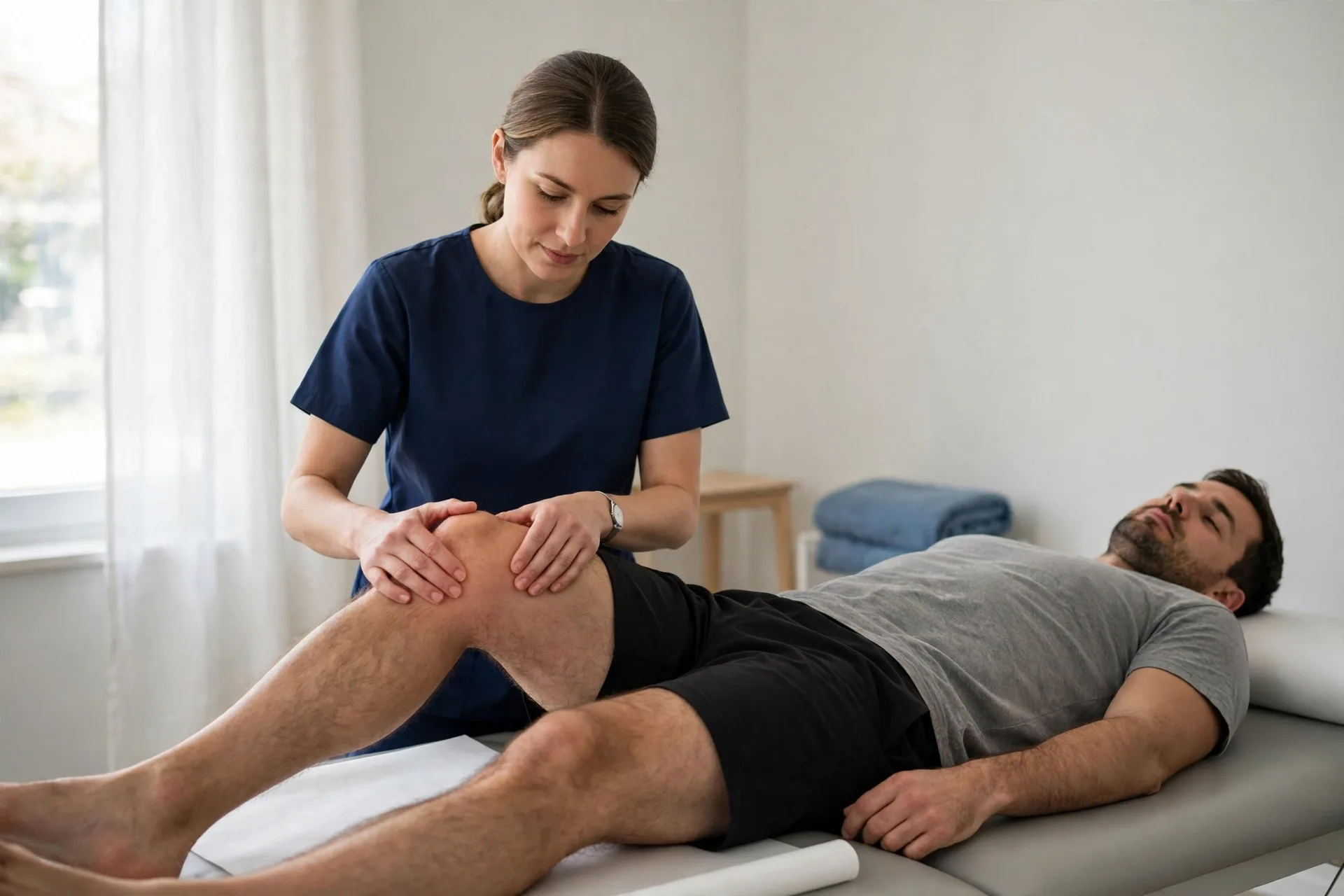
Diagnosis starts with your story and a hands-on examination, and an experienced physiotherapist can identify most meniscus tears at the first visit. You will be asked how the injury happened, where exactly it hurts, whether the knee has locked or caught, and how the swelling behaved. Wear shorts or loose pants so the knee can be examined easily.
An MRI is not always needed. It is useful when the diagnosis is unclear, when surgery is being considered, or when recovery is not progressing as expected. Remember that MRI scans frequently show degenerative tears in pain-free knees, so the scan is read together with your symptoms and examination, never on its own. In British Columbia you can book a physiotherapy assessment directly, and your physiotherapist will refer you to your family doctor or an orthopedic surgeon if anything suggests you need one.
Meniscus Tear Treatment in Surrey: How Physiotherapy Helps
Physiotherapy is the first line of treatment for most meniscus tears, and it is also required before and after any surgery. A good program does far more than hand you a sheet of exercises. At Renew Physiotherapy in Surrey, treatment typically moves through these stages:
Exercises for a Meniscus Tear
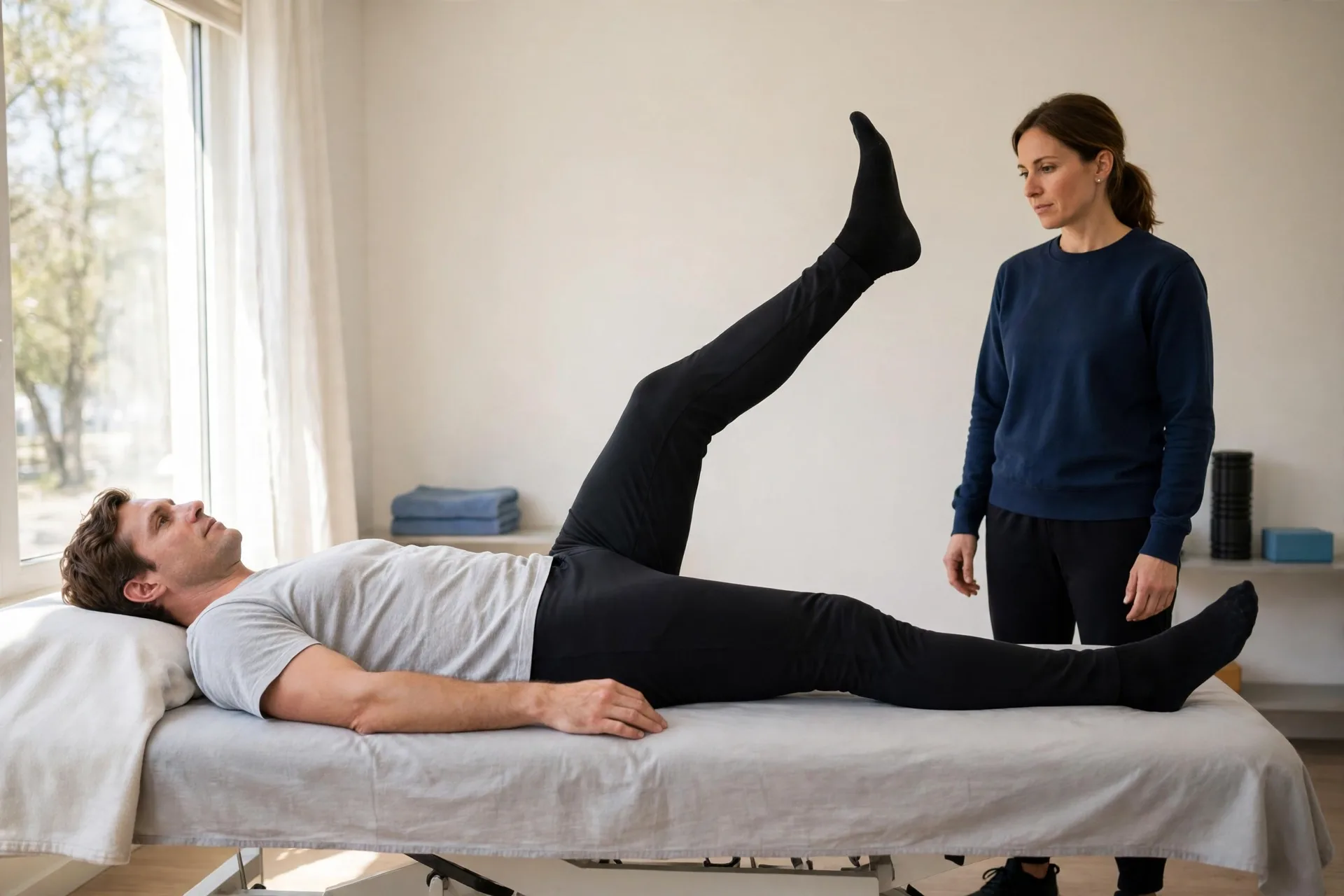
Exercise is the most effective long-term treatment for a meniscus tear, but only the right exercises at the right stage. Start gently, avoid deep squatting and twisting under load early on, and stop any exercise that causes sharp pain or swelling that lasts into the next day. These exercises are general guidance, not a prescription; your physiotherapist will adjust them to your tear and your stage of recovery.
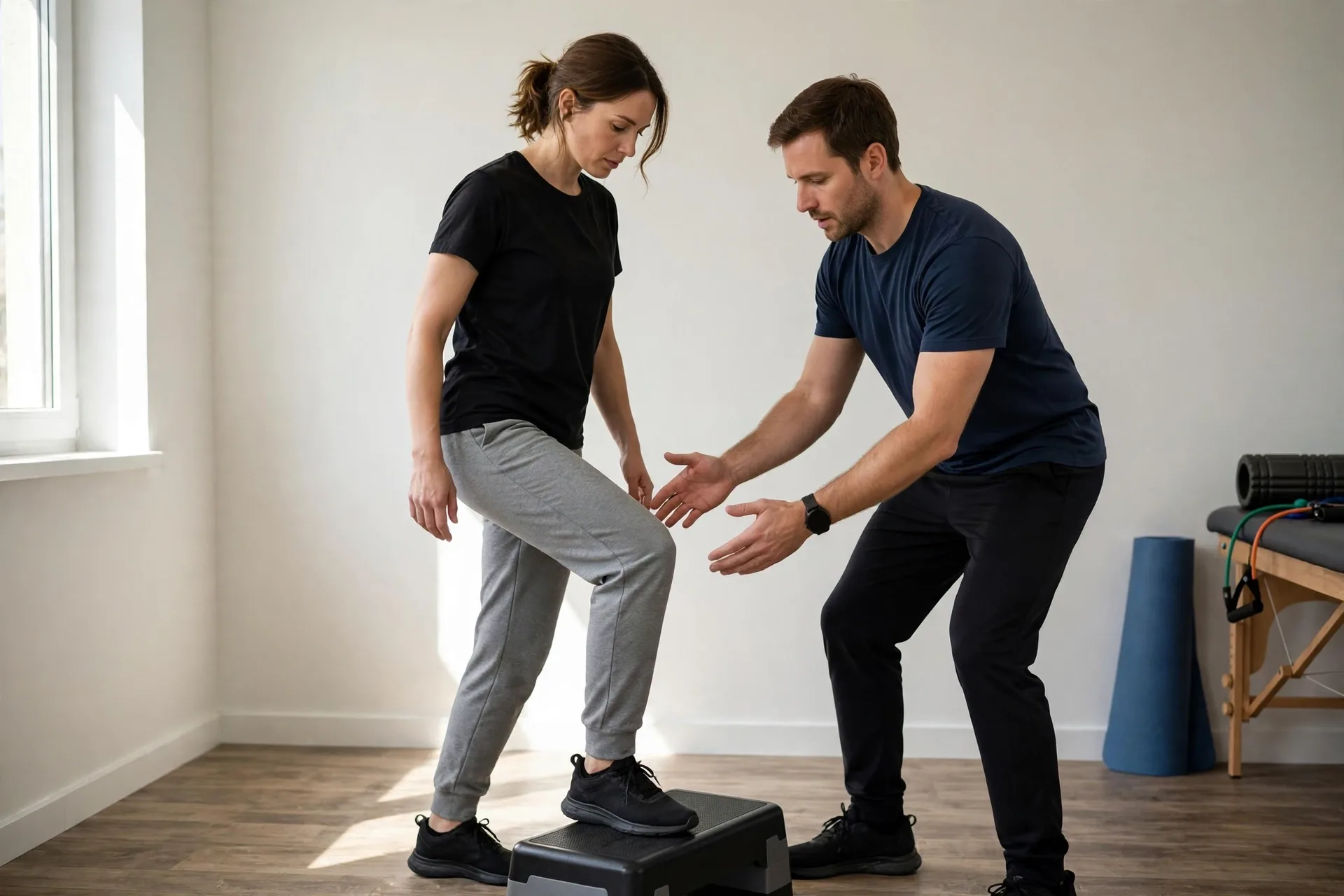
A useful rule for all of these: mild muscle effort is fine, sharp joint pain is not, and swelling the next morning means the dose was too high. Progress one variable at a time, either repetitions, resistance, or range, and let your physiotherapist set the pace at each visit.
Surgery or Physiotherapy? What the Evidence Says
This is the question almost every patient asks, and the honest answer is: it depends on the type of tear, your age, and your goals.
Recovery Timelines: Meniscectomy vs Repair
Recovery is measured in weeks to months, and the two operations have very different timelines because the tissue needs different protection:
- Non-surgical rehab: guided treatment typically 6 to 8 weeks, return to full activity often 3 to 6 months, depending on the tear and your goals.
- Partial meniscectomy (trim): weight-bearing as tolerated right away, often with a walking aid for a few days. Return to sport commonly takes 4 to 6 weeks once strength and control are back.
- Meniscus repair: slower, because the stitched tissue must heal. You may be in a locked brace with minimal or no weight on the leg for up to 6 weeks, see your physiotherapist 2 to 3 times a week at first, and return to sport usually takes 3 to 4 months.
- Desk work: often back within a week or two for a minor tear, longer after surgery.
- Physical work involving kneeling, lifting, or climbing: may need 6 to 12 weeks, depending on the injury and treatment.
The calendar matters less than the milestones. A safe return means the injured leg is nearly as strong as the other one, the knee bends and straightens fully, there is no swelling that comes and goes, and you can hop, cut, and land without pain or giving way. Your physiotherapist tests all of this before clearing you, because rushing back is the most common cause of re-injury.
Red Flags: When to Get Checked Promptly
Most meniscus tears can be assessed within a few days, but some signs mean you should not wait:
- The knee is locked and will not straighten fully. A displaced piece of meniscus can jam the joint, and the sooner it is assessed, the better the outcome. Treat this as urgent.
- You cannot put weight on the leg without severe pain.
- Rapid, heavy swelling within a few hours of the injury, which can signal a more serious injury inside the joint.
- The knee keeps buckling during normal walking.
- Pain and swelling that keep worsening after several days of rest and ice.
- Numbness, or the foot feels cold or pale (rare, but urgent).
- Fever, redness, or a hot, very painful knee, which can signal infection and needs same-day medical care.
If any of these apply, contact a physiotherapist or your doctor promptly rather than waiting it out. Early assessment also matters for a simpler reason: the sooner the right treatment starts, the shorter the recovery tends to be.
Preventing Another Meniscus Tear
You cannot make a knee injury-proof, but you can lower the risk a lot. Strong quadriceps, hamstrings, and glutes protect the meniscus by controlling how the knee moves under load. Neuromuscular training programs that teach safe landing, cutting, and deceleration have been shown to cut knee injury rates significantly, especially in young athletes. Warm up properly, build training load gradually rather than in sudden jumps, and keep up a maintenance strength program after rehab ends; the exercises that fixed the knee are the ones that keep it fixed. For everyday life, avoid twisting on a planted foot under load, lift with your legs rather than pivoting with weight in your hands, and keep a healthy body weight, since every extra kilogram multiplies through the knee with each step.
Frequently Asked Questions
Many meniscus tears settle well without surgery. The outer third of the meniscus has a blood supply and can heal, while the inner part usually cannot heal itself. Even when a tear does not fully heal, structured physiotherapy often makes the knee pain-free and fully functional, because strong muscles take load off the damaged cartilage. That is why meniscus tear treatment Surrey physiotherapists provide starts with rehabilitation for most people.
Many people do not. For degenerative tears in adults over 40, research consistently shows physiotherapy gives results equal to arthroscopic surgery at one and two years. Surgery is more likely for younger patients with a large traumatic tear in the repairable outer zone, for a knee that is truly locked, or when months of good rehab have not helped. Your assessment helps sort out which group you are in.
It depends on the tear and the treatment. Non-surgical rehabilitation typically lasts 6 to 8 weeks, with many people returning to full activity in 3 to 6 months. After a partial meniscectomy (trim), return to sport often takes 4 to 6 weeks. After a meniscus repair, recovery is slower, usually 3 to 4 months, because the stitched tissue needs protection while it heals.
Keep moving, but move wisely. Complete rest weakens the thigh muscles that protect the knee. Gentle movement, the exercises in this guide, and daily activities within your pain limits are better than bed rest. Avoid twisting on a planted foot, deep squatting, and pivoting sports until your physiotherapist clears you, and use crutches if walking makes you limp.
See a physiotherapist if your knee swells after a twist, if it catches, clicks or locks, if pain along the joint line lasts more than a week or two, or if you cannot fully straighten the knee. A locked knee that will not straighten needs prompt assessment. You do not need a doctor's referral in BC, so you can book directly.