
Has a deep, pinpoint ache in your shin, foot, or hip started showing up earlier and earlier in every run, walk, or shift on your feet, easing with rest only to return the moment you load it again? That pattern often points to a bone stress injury, and stress fracture treatment Surrey physiotherapists provide starts with one important step: making sure the bone is properly assessed before any exercise program begins.
A stress fracture is a tiny crack in a bone caused by repeated load rather than a single accident. Think of bending a paperclip back and forth: each bend does almost nothing, but eventually the metal gives way. Bone works in a similar way. Every step creates microscopic damage that healthy bone repairs, but when training, work, or walking load rises faster than repair can keep up, damage accumulates into a stress reaction and, if loading continues, a crack. Stress fractures are common in runners, dancers, military recruits, and people whose jobs keep them on their feet, and they also occur in people with low bone density even without sport.
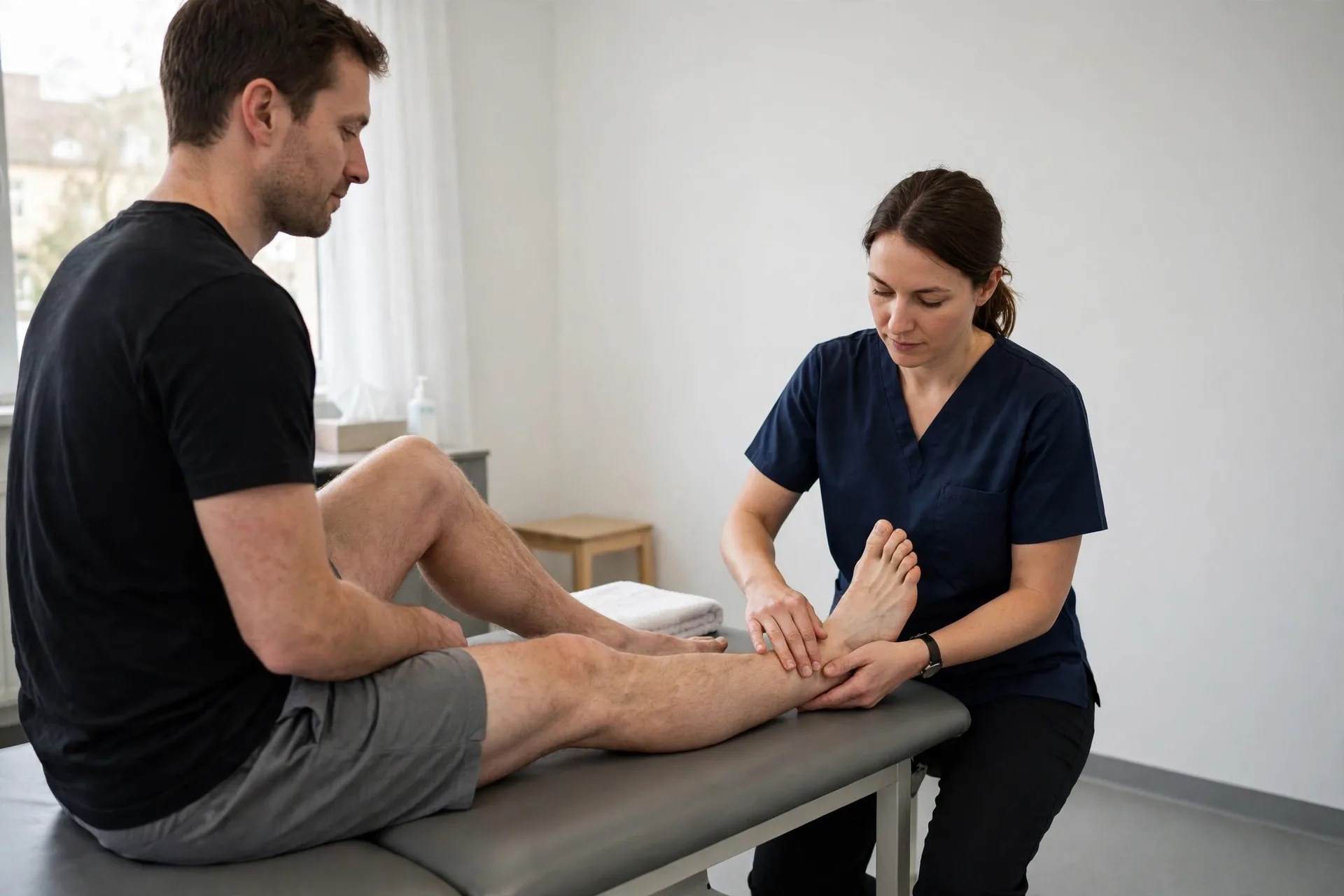
What Is a Stress Fracture?
Bone is living tissue that constantly remodels: old bone is broken down and new bone is laid down in response to load. A stress fracture happens when breakdown outpaces rebuilding. The sequence usually runs like this: normal bone, then bone stress (often called a stress reaction, where the bone is swollen and painful but not yet cracked), then a visible crack, and in the worst cases a complete fracture if the warning pain is ignored and loading continues.
Stress fractures most often affect the weight-bearing bones of the leg and foot: the metatarsals (the long bones of the forefoot, especially the second and third), the tibia (shin bone), the fibula (the thinner outer leg bone), the femur (thigh bone, including the femoral neck near the hip), the pelvis (including the sacrum at the back), the navicular (a small bone on the top inner midfoot), and the heel bone (calcaneus). They also occur in the ribs, upper arm, and lower back in certain sports, but the leg and foot account for the large majority of cases we see in Surrey.
Two ideas matter for everything that follows. First, location determines risk. Low-risk sites, such as the second and third metatarsals, the fibula, the inner (posteromedial) tibia, and the pelvis, generally heal well with load management. High-risk sites, such as the femoral neck, the front (anterior) tibia, the navicular, and the base of the fifth metatarsal, heal poorly, can progress to a complete fracture, and need prompt medical referral and sometimes surgery. Second, a stress fracture is a medical diagnosis, not a physiotherapy diagnosis. Physiotherapy plays a central role in rehabilitation, but suspected stress fractures need doctor assessment and usually imaging. Our clinic works alongside your family doctor or sports medicine physician rather than instead of them.
Causes and Risk Factors for Stress Fractures
Stress fractures rarely have one cause. They are the end result of load exceeding the bone's current capacity, and capacity itself depends on training, recovery, nutrition, hormones, and bone health. The most common contributors are:
- A rapid increase in training load. Adding distance, speed, hills, or jump training too quickly is the classic trigger. The "too much, too soon" pattern shows up in new runners, athletes returning after a break, and people starting a physically demanding job.
- Low energy availability and RED-S. When the calories eaten do not cover training plus normal body functions, hormone levels and bone building suffer. This pattern, called Relative Energy Deficiency in Sport (RED-S), affects athletes of all sexes and is one of the strongest risk factors for bone stress injuries. It can occur without any eating disorder, simply from under-fuelling a heavy training load.
- Low vitamin D, low calcium intake, and low bone density. Bone needs raw materials. Vitamin D deficiency is common in BC winters, and inadequate calcium or overall nutrition slows repair. People with osteopenia or osteoporosis can develop stress fractures (sometimes called insufficiency fractures) with ordinary daily loads. Our guide to osteoporosis physiotherapy in Surrey explains how bone health is assessed and supported.
- A previous stress fracture. A prior bone stress injury is one of the strongest predictors of another, especially if the underlying load or nutrition issue was never addressed.
- Biomechanics and muscle fatigue. How you run, land, and push off changes where load lands in the bone. Weak calves, hips, and core muscles fatigue early, and tired muscles absorb less shock, passing more force to bone. This is one reason stress fracture rehabilitation overlaps with the strengthening work in hamstring strain treatment in Surrey and other lower-limb programs.
- Footwear, surfaces, and foot shape. Worn-out shoes, a sudden switch to minimalist footwear, running mostly on hard cambered roads, high arches, and a long second toe can all concentrate load on specific bones.
- Hormonal and medical factors. Irregular or absent periods, low testosterone, thyroid conditions, certain medications (including some steroids and acid-reducing medicines), smoking, and heavy alcohol use can all impair bone repair.
Low-Risk and High-Risk Stress Fracture Sites
Where the crack sits changes the urgency and the plan. Low-risk sites have a good blood supply and are loaded in compression, which favours healing. High-risk sites are loaded in tension (pulled apart with each step) or have a poor blood supply, so they heal slowly and can complete into a full fracture.
- Generally low-risk: second and third metatarsals, fibula, inner (posteromedial) tibia, pelvis and sacrum, calcaneus, and the femoral shaft. Most heal in about 6 to 8 weeks with load management, though the sacrum and pelvis can take longer.
- High-risk, needs prompt medical referral: femoral neck (near the hip joint), anterior tibia (the front shin, often felt as a painful "dreaded black line" on imaging), navicular (midfoot), base of the fifth metatarsal, and the sesamoids under the big toe. These often need non-weight-bearing, a boot or cast, and sometimes surgery. A femoral neck stress fracture that completes can cut off the blood supply to the hip joint, which is why hip or groin pain in a runner is treated as urgent until proven otherwise.
Symptoms of a Stress Fracture
Bone pain has a fairly distinctive behaviour, and learning it helps you act early, when a stress reaction is still reversible:
- A pinpoint spot of bony tenderness you can cover with one fingertip, rather than a broad area of muscle soreness.
- Pain that builds during activity, often starting later in a run at first, then earlier and earlier over days to weeks.
- Pain that eases with rest in the early stages, then starts to linger after activity, and eventually hurts with walking or even at rest or at night if loading continues.
- Pain reproduced by hopping on the affected leg (a test your clinician may use carefully, and one you should not repeatedly self-test at home).
- Mild swelling over the bone, sometimes with a firm bump as healing callus forms.
- A clear story of increased load: new training plan, more shifts on concrete, a return from holiday, or new footwear.
How a Stress Fracture Is Diagnosed
Diagnosis starts with your story and a hands-on examination, and it is confirmed by a doctor, usually with imaging. At your physiotherapy assessment you will be asked about training changes, previous bone injuries, menstrual or hormonal history where relevant, nutrition, vitamin D, medications, and footwear. The examination includes pressing along the bone to find focal tenderness, checking neighbouring joints and muscles, screening strength and movement, and watching how you walk. Wear shorts and bring your running or work shoes so they can be inspected.
Imaging has a known trap: plain X-rays are often normal for the first 2 to 3 weeks because the crack and healing response are too small to see. A normal early X-ray therefore does not rule out a stress fracture. MRI is the gold standard because it shows bone swelling (a stress reaction) before a crack appears and grades severity, which guides how strict the offloading needs to be. CT is sometimes used for specific sites such as the navicular. Your physiotherapist cannot order or interpret imaging in place of a doctor, but we will flag the pattern early, protect the bone, and help you get seen promptly. In many cases the safest first step is to stop the aggravating load while assessment is arranged, because a stress reaction caught early may settle in weeks, while a completed fracture can take months.
What to Do First When You Suspect a Stress Fracture
The first goal is simple: stop feeding the injury while the diagnosis is confirmed. Bone cannot out-repair a load that keeps damaging it.
- Stop running, jumping, and the aggravating activity. Do not "test it" every few days to see if it still hurts. Each test run restarts the damage cycle.
- Reduce weight-bearing pain. Walk only within comfort. If walking hurts or you are limping, use crutches or a boot as directed by your doctor or physiotherapist. A limp is not harmless: it shifts load to other tissues and can create a second problem, the same compensation pattern we manage in ankle sprain treatment in Surrey.
- Keep fitness with non-impact exercise, if cleared. Stationary cycling, pool running, and swimming often maintain fitness without loading the bone, but only once your clinician agrees the site and severity allow it.
- Do not rely on painkillers to keep training. Masking bone pain and continuing to load is how stress reactions become fractures. Discuss medication choices with your doctor or pharmacist, as some anti-inflammatory use around bone healing is debated and should be individualised.
- Book both appointments. See your family doctor or a sports medicine clinic for diagnosis and imaging, and a physiotherapist for load management and rehabilitation. No doctor's referral is needed to see a physiotherapist in BC, but for a suspected stress fracture we will almost always coordinate with your doctor.
Stress Fracture Treatment in Surrey: How Physiotherapy Helps
There is no exercise that knits bone faster than biology allows. What physiotherapy does is protect the healing bone, maintain everything around it, fix the reasons the bone failed, and rebuild load in the right order so you return without re-injury. At Renew Physiotherapy in Surrey, care usually moves through three phases, and progression is criteria-based: you advance when pain behaviour and strength say you are ready, not when a calendar page turns.
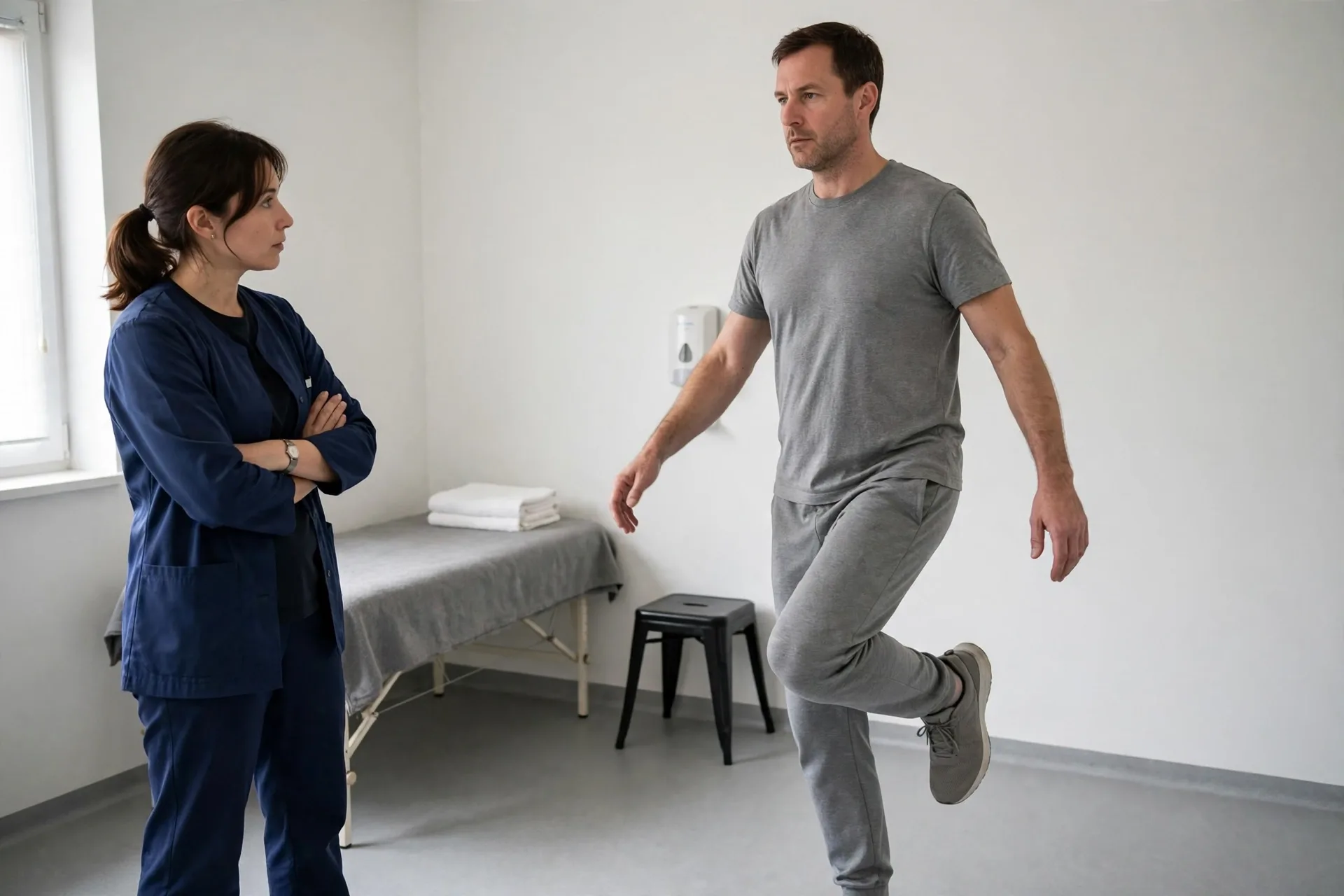
Exercises During Stress Fracture Recovery
These exercises are general guidance for the rehabilitation phases, not a prescription, and several are only appropriate once your doctor and physiotherapist confirm the bone is healing and loading is permitted. Nothing here should reproduce pinpoint bony pain. If an exercise causes focal bone pain, stop and tell your physiotherapist.

Recovery Timelines for Stress Fractures
Timelines vary by site, severity, and bone health, and honest ranges matter more than promises:
- Stress reaction (no crack yet): often 3 to 6 weeks of modified load if caught early, sometimes less.
- Low-risk stress fractures (metatarsals 2 and 3, fibula, inner tibia, calcaneus): commonly about 6 to 8 weeks before a graded return to running begins, with full training often at 8 to 12 weeks.
- Pelvis and sacrum: frequently 8 to 12 weeks or longer, reflecting slower healing and the difficulty of fully offloading the pelvis.
- High-risk sites (femoral neck, anterior tibia, navicular, fifth metatarsal base): often 3 months or more, with non-weight-bearing periods and possible surgery. These timelines are set by your doctor or surgeon.
- Desk work: usually manageable throughout, with walking breaks kept pain-free.
- Standing and physical work: may need modified duties for several weeks, especially on concrete floors; a boot or crutches can be required depending on the site.
Returning to running the moment pain settles, without rebuilding strength and progressing load, is the most common reason stress fractures recur. A second bone stress injury at the same or a new site should always trigger a deeper review of training load, nutrition, vitamin D, and bone density with your doctor.
Red Flags: When to Get Checked Promptly
Some presentations should never wait for a routine appointment:
- Hip, groin, or deep buttock pain in a runner or active person that worsens with weight-bearing. This can be a femoral neck stress fracture; stop running, keep weight off the leg, and get same-day medical assessment.
- Pain that now hurts with normal walking, at rest, or at night, or pain that is rapidly getting worse despite rest.
- A sudden sharp worsening of pain, a pop, or inability to bear weight, which can mean the stress fracture has completed.
- Focal bone pain with fever, unexplained weight loss, night sweats, or a history of cancer. These need prompt medical review to rule out infection or other bone disease.
- Stress fractures that keep recurring, fractures from minimal load, or missed periods, rapid weight loss, or other signs of low energy availability. These need doctor review of bone health, hormones, and nutrition.
- Marked swelling, bruising, numbness, or a foot that becomes pale, cold, or very painful after an injury, which needs urgent care.
- No improvement after 2 to 3 weeks of proper offloading, which warrants imaging review and a sports medicine opinion.
Preventing Another Stress Fracture
Prevention is mostly about respecting the ratio between load and capacity. Build training gradually, changing one variable at a time and keeping easy weeks in the plan after hard blocks. Eat enough to cover your training, with adequate calcium and protein, and have vitamin D checked with your doctor, especially through BC winters. Keep two short strength sessions a week for calves, hips, and core, because muscle is bone's shock absorber. Replace worn shoes, vary surfaces, and treat pinpoint bony pain as information: a few easy days at the stress-reaction stage can save months at the fracture stage. If periods become irregular, weight drops unintentionally, or bone injuries repeat, raise it with your doctor early. Bone health is a whole-body issue, and the rehabilitation plan works best when training, nutrition, and medical care pull in the same direction.
Frequently Asked Questions
Most low-risk stress fractures need about 6 to 8 weeks of protected loading before a graded return to running, with full training often at 8 to 12 weeks. A stress reaction caught early may settle in 3 to 6 weeks. High-risk sites such as the femoral neck, navicular, and anterior tibia often take 3 months or more and are managed by a doctor. That is why stress fracture treatment Surrey physiotherapists provide is criteria-based: you progress when pain behaviour, tenderness, and strength tests say the bone is ready.
No. Mild pinpoint bony pain that builds during activity is exactly how stress reactions announce themselves, and continuing to run is how they become cracks or complete fractures. Stop running and jumping, keep walking pain-free, and get assessed. Cross-training such as cycling or pool running may be allowed once your clinician confirms the site and severity.
Plain X-rays often look normal for the first 2 to 3 weeks because the crack and healing response are too small to see. MRI is the gold standard because it detects bone swelling at the stress-reaction stage and grades severity. A normal early X-ray does not rule out a bone stress injury, which is why your doctor may order further imaging if the examination points that way.
It depends on the site and severity. Many low-risk injuries heal with activity modification alone, while foot and high-risk injuries often need a walking boot, crutches, or a period of non-weight-bearing directed by your doctor. If normal walking hurts or you are limping, the bone is being overloaded and offloading help is needed.
See a physiotherapist promptly if you have pinpoint bony pain that builds with activity, pain that is appearing earlier in every run or shift, or focal tenderness over the shin, foot, or hip. Also see your family doctor for diagnosis and imaging, because physiotherapy supports healing and return to activity but does not replace medical diagnosis. No doctor's referral is needed in BC.